Saturday, April 11, 2009

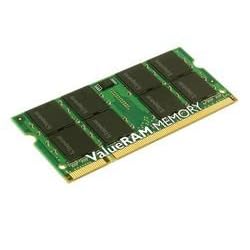
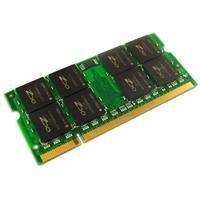
Kingston ram Memory KVR667D2S5/2G 2GB 667MHz DDR2 Non-ECC CL5 SODIMM ValueRam Memory


This is an easy, painless upgrade for any mini notebook or netbook that comes with only a factory 1G ram. I was able to intstall the 2G within less than 5 minutes and almost immediately after opening my Asus PC Eee 1000HA. The trick to upgrading the memory on the Asus is you MUST go into Bios and turn off the original 1G then updated to 2G then go to Bios again to turn on what you just turned off before rebooting computer. Sounds complicated...it isn't. I actually went onto YouTube, searched for "upgrade Asus to 2G" found a step by step video, followed it and Poof....DONE! Easy, simple and it works. Save time and check out the videos before adding gig. It is really simple, pops out and pops in. Faster memory in the blink of an eye.
Read rest of entry

OCZ memory 2 GB PC2-5400 667 MHz DDR2 Value SODIMM Laptop Memory (OCZ2MV6672G)

I got this to upgrade to replace my new Asus EEE PC 1000h's 1gb chip. There is a very noticeable improvement in the speed of a lot of operations including Firefox and MS Word. A free benchmarking tool bumped the total score from an 80 to 135, making the 1000h as good as a full size Toshiba Satellite laptop running a AMD 6400 dual core! It doesn't seem to significantly affect the the battery life one way or another. This is my second OCZ memory upgrade, the first one worked out great too. I'm very pleased with this purchase!
Read rest of entry

Friday, April 10, 2009

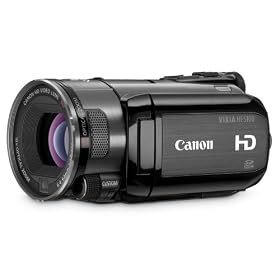
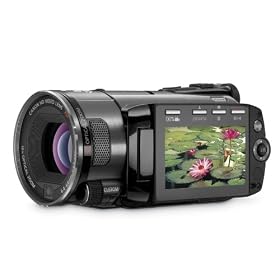
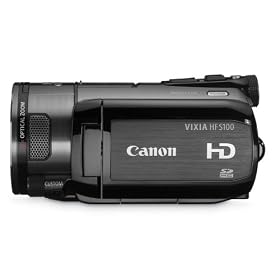
Canon VIXIA HFS100 HD Flash Memory Camcorder w/10x Optical Zoom


Canon's website says the list price for this camera (HFS100) is $1099 - not $1299, as stated by Amazon. Maybe Amazon has confused this camera with the HFS10, which does list for $1299
Read rest of entry

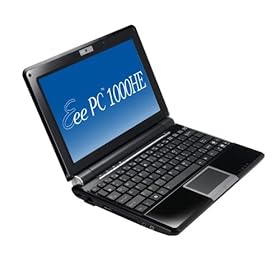
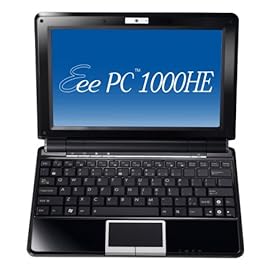
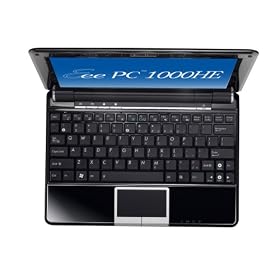
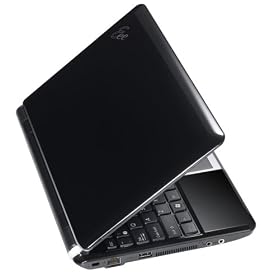
ASUS Eee Laptop PC 1000HE 10-Inch Netbook (1.66 GHz Intel Atom N280 Processor, 1 GB RAM, 160 GB Hard Drive


I have had the Eee PC 1000HE for about a week now, and it has fulfilled my every expectation. Because I hadn't started up the Eee without installing the 2 GB RAM I'd purchased, this review is relevant to those who plan to upgrade, or have already upgraded the RAM in the unit. For those who don't, I will add that it is extremely easy and inexpensive to double the RAM of this netbook. I had never opened a laptop chassis before, and it took all of 5 minutes.

Pros:
*Up front, the package is inexpensive. You definitely get the bang for your buck
*Bright, brilliant screen with an excellent viewing angle.
*Large, more comfortable keyboard; touch typing is incredibly easy to get used to.
*Long battery life; I've had mine unplugged for over seven hours without a recharge.
*Exactly the amount of power and speed that I need from a computer, I'm able to run some of my favorite games (GTA: San Andreas, UT2004, and Neverwinter Nights) without breaking a sweat, edit photos and stream videos through the wireless card.
*The power-saving hotkeys are really useful. Most of the time I don't notice the difference between 'Power-Saving' mode and 'Super Performace' mode, which means for normal usage I'm saving a lot of battery life.

Cons:

*The volume is a bit too low on the speakers, AND when I'm wearing headphones. I've opened up all of the volume adjusters at one point or another, and I can't increase the volume past a certain point. I could imagine this being very irritating on a long bus ride or a plane ride.
*As really helpful the multi-touch pad is (and it truly is helpful), some of the presets are too closely linked to "scroll up and down". For example, I find myself opening a 'magnifying glass' one moment, and 'zooming out' of a webpage the next. I couldn't figure out why all my webpages were tiny. So disabling most of the multi-touch functions is probably a smart idea when you get started.
*This is just a quibble, but the resolution of 1024 x 600 is so specific to a very small number of machines.

Overall, the Eee PC 1000HE is something I will be using consistently. It is exactly what I need.
Read rest of entry

Thursday, April 9, 2009

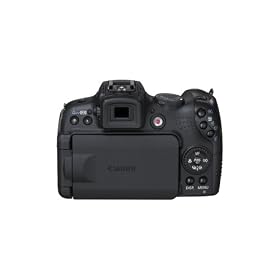
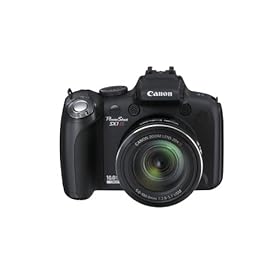
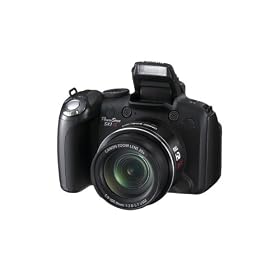
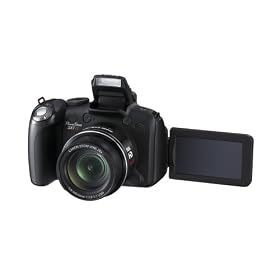
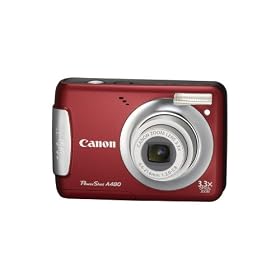
Canon PowerShot SX1IS 10 MP CMOS Digital Camera with 20x Wide Angle Optical Image Stabilized Zoom and 2.8-inch LCD


Product Features and Technical Details

Product Features

  • First PowerShot to feature a 10.0-megapixel Canon CMOS sensor
  • Full HD (1920 x 1080 pixels at 30 fps) movie mode plus HDMI output
  • 28mm wide-angle 20x optical zoom lens with Optical Image Stabilizer
  • 2.8-inch Vari-angle LCD widescreen; DIGIC 4 Image Processor with Face Detection Technology
  • Compatible with SD/SDHC, MMC/MMC Plus/HC MMC Plus (not included)

Technical Details

  • DIGIC 4 Image Processor
  • 25 Shooting Modes
  • Focal Length: 5.0-100.0mm f/2.8-5.7 (35mm film equivalent: 28-560mm)
  • Maximum Aperture: f/2.8 (W) - f/5.7 (T)
  • Shutter Speed: 15-1/3200 sec.; Long Shutter operates with noise reduction when manually set at 1.3-15 sec.
  • ISO Sensitivity: Auto, High ISO Auto, ISO 80/100/200/400/800/1600 equivalent (Standard output sensitivity. Recommended exposure index)
  • Exposure Control Method: Program AE, Manual Exposure, i-Contrast, Program Shift, Safety Shift, Auto ISO Shift; AE Lock
  • Built-in Flash: Auto, Manual, Red-eye Reduction, Auto Red-eye Correction, Flash On, Flash Off; FE Lock, Safety FE, Slow Synchro
  • Dimensions (WxHxD): 5.02 x 3.48 x 3.45 in./127.5 x 88.3 x 87.7mm
  • Weight: Approx. 20.6 oz./585g (camera body only)
Read rest of entry

Wednesday, April 8, 2009

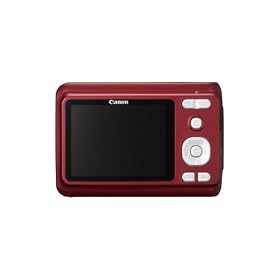
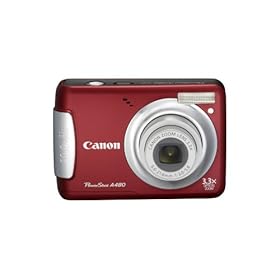
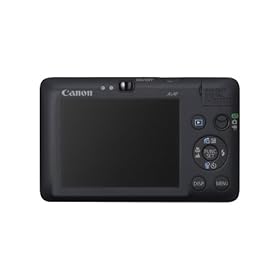
Canon PowerShot A480 10 MP Digital Camera with 3.3x Optical Zoom and 2.5-inch LCD (Deep Red


Bought this camera looking for an easy point and shoot that would still take good quality pics -- to offset our larger digital SLR (just too much of a pain to drag along some times).

After 4 days of use we are unimpressed. The picture quality is extremely grainy. The "charging flash" is extremely annoying. And the battery life is poor -- at least compared to other cameras I've had.

I'm sending this one back.

Read rest of entry

Tuesday, April 7, 2009

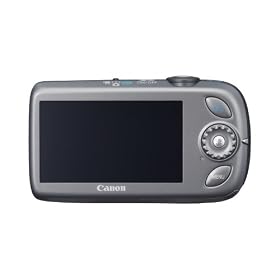
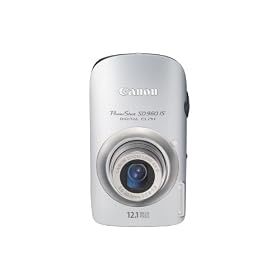
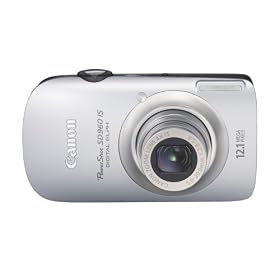
Canon PowerShot a620 SD960IS 12.1 MP Digital Camera with 4x Wide Angle Optical Image Stabilized Zoom and 2.8-inch LCD (Silver)


The true market for this camera is someone who wants to have one device that is compact, shoots excellent quality pictures, and has the capability of capturing 720P HD movies.

It's a Canon, so the image quality is a given. Tons of examples on Flickr if you simply search for "canon SD960" or "IXUS 110". Colors are true, not highly sharpened, low chromatic aberration, and rich with detail. Do not, however, mistake this power of the DIGIC IV processor to be perfect and free of noise at high zoom or ISO above 400. Compared to its class, however, the results are just great for the price point.

But the odds are you are looking at this camera not just for its stills ability, but the fact that it can also shoot HD movies.

So how does the HD perform. Here, the optical stabilization and optical zoom make this a far better choice than it's nearest hybrid competitor, the Flip HD. The Flip is a fun, very easy to use device, but the lack of image stabilization in camera makes the output very choppy and prone to a "jello" wobbling effect. The Canon has a much smoother output. A strong performer in low light (but expect more noise) and a really excellent result in natural light. For samples, my best recommendation is to search Vimeo -- they have the best HD streaming of uploaded videos, and looking at results on Youtube (even if "HD") doesn't do the camera justice.

In practice, Mac users will be happy to see that iPhoto can handle the whole offload process -- stills and movies. Launch iPhoto, turn on camera and load what you'd like. The movie files are H.264, and can be quickly edited in iMovie or Final Cut.

One worthy note on shooting movie and zoom. You frame your shot and set focus with a half push of the shutter button. Press all the way to record. Once you start recording, you are set at your original zoom level and can not use the OPTICAL zoom to pull closer. Instead, the camera uses DIGITAL zoom to get closer. In practice, I found this did not produce a terribly degraded result, but it is worthy noting before you purchase the camera.

Mono mic on the camera, which pics up sound very well -- even on the crowded/noisy streets of NYC.

The cheaper Canon SD780 is very nice also if you are looking to save $50. The newer jog wheel and extra zoom, however, was worth the upgrade (IMHO).

Budget for one of the 8G or 16G SDHC cards sold on Amazon for 50+ minutes of HD recording. And probably worth buying a 3rd party second battery to have on hand.
Read rest of entry

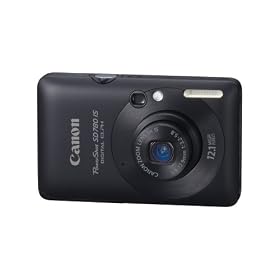
Canon PowerShot s3 is SD780IS12.1 MP Digital Camera with 3x Optical Image Stabilized Zoom and 2.5-inch LCD (Black)

Buy this product from Amazon.com

If you want this little new camera from Canon it's probably due to it's attractive body and small size, something Canon has done well in the past and managed to improve upon in the SD780 IS. If those two things are topping your list, don't bother reading this review. You've succeeded in finding a tiny, attractive little camera that can go just about anywhere. If quality and features also matter, it's more of a mixed bag. As usual, when you make a camera this small, the form factor means sacrifices in more practical areas. Nonetheless, Canon does a nice job all-around in giving you an excellent value despite the shortcomings inherent in pocket photographic devices.

For owners of small pocket cameras, it should come as no surprise that noise is the number one problem with this device. With a 12MP sensor, it's no wonder there's so much noise in every photo you take. Outdoors, indoors, pitch black, whatever: it doesn't matter. You will see noise no matter how well-lit your scene is, whether there are dark areas or not. This is a huge drawback if you're printing large photos. If you're like most people and only go beyond 4x6 or 5x7 for that occasional photo that warrants an 8x10, you don't have much to worry about. Though cramming 12MP into a tiny little sensor, like the one used in the SD780 IS, is certainly a cause of the high levels of noise, the resolution it provides makes the noise imperceptible when printing small photographs. You may notice it in an 8x10 photo taken at night, but for your smaller prints you should get by just fine.

Where noise is a bigger problem is in the video mode. Since the introduction of their 5D Mark II DSLR, Canon's begun to embrace high-definition video across their photographic line. Though few cameras in Canon's arsenal can capture HD video at this time, I believe by the end of 2009 it should be more the norm than the exception. While the SD780 IS doesn't capture 1080p video like the 5D Mark II, or it's (much) bigger brother the SX1S IS, 720p is quite a feat for a camera this small. It's comparable in size to the Flip Mino HD and only costs about $50 more (if you're comparing by suggested retail pricing). Though not as straightforward and simple as the Flip, by virtue of being a still camera first and a video device second, if you're looking for a device that does both and are willing to pay a little extra you've found it. The video quality in the Canon SD780 IS is more uniformly sharp (in daylight or indoors), though the Flip Mino HD tends to pick up slightly more detail in the distance (in daylight, not indoors). The SD780 IS gives you selective focus and stabilization. While you may not care for selective focus, the image stabilization offered in the SD780 IS is very nice to have when taking video clips. The image stabilizer allows for nice, smooth pans that are not offset by the "jello effect" you get with CMOS sensors. The Flip uses a CMOS and has that issue. The SD780 IS uses a CCD and does not. The SD780 also offers H.264 encoding at an average bit rate of about 24Mbps. For H.264 720p video, this is a very high bit rate from a device. Nonetheless, the files aren't too big. If you've got a 16GB SDHC card you'll get about an hour and a half of video. Where the Flip does a better job, however, is in noise.

Though the Flip isn't exactly the best device in low light, it still manages pretty well for a tiny little camera. The SD780 IS looks noisy in every situation. While the high megapixel rating keeps the noise harder to see in a photo, when you're dealing with 720p video the noise is very apparent. You can see it in perfect daylight, though it's not that bothersome, and you can really see it indoors regardless of the lighting. This is a noisy camera. Though it's forgivable in the photographs, in most cases, it really hurts the video mode. Given the limitations of the tiny hardware and the unfortunate megapixel race, noise reduction would've been nice. Nonetheless, if you're looking for an incredibly tiny device that records HD video, the SD780 IS should by high on your list by virtue of its stabilization.

Being that this is a primarily a still camera and not a video device, there are a lot of positives to look at. Let's start on the outside and work our way in. Canon's clearly put a lot of thought into the form factor. Regardless of what color you get, I think most will agree that this is a very attractive device. It's compact and light, so taking it with you will seem about the same as not taking it with you: you will often forget you have it. On one hand, that's very nice. On the other, make sure you don't lose it. Though it's not the smallest camera you can buy, it feels a lot smaller than it is. This could be an issue for some people. I've owned and/or reviewed a large number of consumer imaging devices and I've never run into the problems that some seem to have with button size. I've used a Sony camera that's a bit smaller than this one and had no issues, whatsoever, with accidental presses. The SD780 IS is the first device I've owned where I often make these mistakes. If you have big fingers, you will probably find this device extremely frustrating. For me, the problem is primarily with what I'll call the function wheel. Kind of like an iPod, in the center is a Function/Set button surrounded by a wheel of four other options. Though this is not a new interface for Canon, it's awfully small on the SD 780 and it's very easy to mistakenly push the wrong button on the wheel (or the center button). Personally, I don't find myself running into this problem too often because I'm not frequently changing settings. Nonetheless, it's something you should consider if you've had trouble with accidental button pushes in the past.

The other switches, however, are quite easy to deal with. The other four buttons on the back panel have quite a bit of space around them, even when not considering how small this camera is, and pushing them is no trouble at all. One is a switch that goes from automatic photo mode to custom photo mode to video mode. Though I've come to prefer separate buttons for starting a video and taking a photo, much like Sanyo does with their line of convergence cameras (which they're now calling "dual cameras"), this switch works well in the sense that it keeps you in the mode and saves you from remembering which button to push when you want something. More importantly, switching modes is about as fast as you could ask for. Though it's not my preferred way to switch modes (because I prefer the devices to seem like there's no switch at all), it doesn't really end up being a problem.

Lastly, there are two buttons on the top of the camera. One is for the shutter and the other is the power button. If you have large fingers, good luck pushing the power button. It's tiny and it isn't raised at all. I consider my fingers normal-sized and have no difficulty pushing the button but if you're concerned, go try the camera in a store before you buy it. As for the shutter, that's no problem at all. You half-depress to focus and press fully to take the photo, like you would with pretty much any digital camera on the market. There is also a zoom ring around the shutter button which has a tiny little edge to it for your finger to flick. It works quite well, despite being as tiny as it is. For the most part, the camera is very easy to control despite its size. Though you may have difficulty when changing settings, when it comes to general operation (aside from turning it on and off) you shouldn't run into issues.

My two favorite parts of the SD780 IS body are its large screen and port access. The screen is incredibly bright and clear, even at half brightness (which is where it starts out of the box and probably where you want to leave it), and is well protected by a glass covering. Smudging is easy to clean but be careful of scratches. The refresh rate of the screen is also excellent. Color accuracy is surprisingly good and realistic, assuming you're not using the "my colors" feature. I've come to expect less from Canon's devices (especially in the white balancing department) and I was pleasantly surprised. While that isn't entirely the display's job, what I see on the screen is what I see in reality. No complaints. If you prefer shooting from the viewfinder, which is perfectly reasonable, you will definitely be disappointed. The option is nice, of course, but it's so incredibly tiny that it seems more for show than for any actual use. I appreciate Canon's inclusion, but I can pretty much guarantee it will never be used for any practical purpose. My other favorite part is the port access, because it's exactly how I like it. In the top left corner (if you're looking at the back of the camera), you pull off this little piece of plastic to reveal a mini HDMI port and a mini USB port. There's no proprietary connections. It's nice to see a tiny camera not sacrifice connectivity for the sake of size. To transfer pictures, just pull the plastic covering away and plug the camera into your computer. The process is the same if you want to connect the camera via HDMI to your HDTV. Canon doesn't include the necessary cable, which is a shame, but being that I've never once connected my camera to a television I'm not really bothered. They do give you a standard definition cable, however, so you're not stranded with no options. On the bottom of the camera there is the usual slide-off access to the battery and memory card. Canon really crammed them both in there, but in a way that's impressive and not cumbersome. Additionally, they managed a tripod head mount on the bottom as well, and you can pull away a little rubber covering to reveal a hole for the tripod head's stabilizer (the little piece that doesn't screw in but holds the camera in place on the head).

Overall, the camera body has an excellent design. It's not only attractive but functional. The only drawback is the possibility of accidental button pushes, but that sort of comes with the territory.

What about the camera's features? We've already discussed video mode, which is excellent aside from the noise issues. The still camera features and controls are quite good all around, with only a few silly omissions. Let's start with the menu system. It's very simple. You press the menu button and you have two columns. One is the very simple camera options column, only giving you four choices, and the other is the function column giving you much more to do. In the camera options, you can turn certain functionalities on or off. Despite the paltry zoom on this device, which is to be expected due to its size, I'd recommend turning off digital zoom. It's on by default. Why it is even included in cameras is something I've never quite understood. As for the functions menu, you have a number of basic functions (display brightness, card formatting, etc.) but also some superfluous functions like changing the sound effects and the camera's startup image. You don't get many choices, and the dog bark shutter sound is absent from this device (which I always loved), but you get choices nonetheless. If you don't want sound effects at all, there is a mute feature. You should note, however, that this camera makes noise on startup nonetheless. The body is a little noisy on its own. The image stabilizer also sounds like a fan is running. I haven't heard the microphone pick up this noise in video mode, but if operation noise is a problem for you for whatever reason you can minimize it by turning off image stabilization. That said, aside from getting a couple of extra pictures out of your battery life, I can't imagine why you'd ever want to turn it off.

Canon's autofocus has lagged behind Nikon's in the DSLR market, in my opinion, but in their consumer devices I've been pretty pleased with how well it works. Autofocus is very fast and, in my experience so far, very accurate. The only problem I've consistently run into is the minimum focal distance in normal mode. Turning on macro mode solves the problem, and seems to be the most versatile mode (as it has no problem, unlike some consumer cameras, focusing far off as well). The unfortunate issue with macro focus is that it resets every time you switch modes or turn the camera off. If you want it on, you need to set it every single time. It would be nice to either be able to change the default or for the camera to automatically switch to macro when it can't manage to focus due to its proximity to the subject.

The flash does a pretty good job for being so tiny. Even from far away, it does well. Oddly enough, close subjects were not as blown out as I'd expected. Often times the photos looked surprisingly natural for a flash. Nonetheless, since you're getting image noise regardless, I recommend shooting with higher ISOs if you have a reasonable amount of light in the room. It still tends to look more natural, especially after a little color correction.

Exposure controls and the self-timer meet expectations. There's not a lot of room for innovation with these features, but you can adjust what I can only assume is the gain before taking a photo. Perhaps you're adjusting shutter speed, though I'm not sure. You can also set a self-timer for 2 or 10 seconds. Actually being able to choose the time would be a nice step up, but I don't think many have complained about the options given. They work just fine.

The SD780 IS also includes many superfluous but fun features common to Canon's consumer line. My Colors is one of them. They give you so many different color modes (including positive film, monotone and sepia) I don't know why you'd want to create your own, but you do have that option. You can also shoot in black and white with a color accent, if you're trying to create the feel of Schindler's List in your family photos (hopefully that includes no one), or just swap colors for whatever reason you'd want to do that.

Playback mode is excellent. It's very easy to zoom in and out on your photos and navigate through them. You can even display a histogram and EXIF data while looking at the photo, which is pretty excessive but cool for a consumer device. Video playback provides a wealth of control, which even includes in-camera editing. This isn't terribly new to Canon's devices but it's still nice. Personally, I'd rather edit outside of the camera but if you need space on your card and don't have a spare it might be a good way to solve that issue (assuming you have parts of your videos that you want to remove).

As far as silly omissions go, when selecting an image size you can get the normal 4:3 or 16:9 (likely a result of the video mode). Where's the 3:2 option? Digital cameras have pioneered the 4:3 format, which, personally, I do not like. When printing a 4x6 photo I'd prefer to avoid cropping. Both 4:3 and 16:9 require cropping, which is unfortunate. It seems ridiculous to not offer 3:2 shooting, but then again that's not the norm with these devices. I think that's unfortunate. As I've mentioned previously, the lack of an HDMI cable and noise reduction is also too bad. The HDMI is understandable as this camera is pretty inexpensive (and you'd never know that by looking at it), but noise reduction is sorely missed. It's no replacement for an actual lack of noise, but a little bit would go a long way with this device.

The battery life is surprisingly good. Perhaps I feel that way because I haven't used a camera this small in a long time, but being that it can make it through the day given all the crap I put it through with room to spare, I'm impressed. The camera also comes with a separate charger, which is great if you want to pick up a spare battery. It's also very easy for travel. Though I always prefer the option, at least, to charge via USB (in case I forget the charger or don't want to bother bringing it with me), the provided charger is very compact and makes charging the battery an easy thing to do. The only downside is that you constantly have to remove the battery from the camera, but they make that access easy enough (as described earlier).

Overall, there's a lot to like about the Canon SD780 IS. The noise issue is the biggest drawback, but educated buyers should know to expect this when purchasing a pocket device. Everything else is mostly trivial. Though the noise issues are a major drawback, especially if you're interested in the mostly great HD video mode, this is a great little camera and well worth the price thanks to the HD video mode.

In summary...

+ Attractive, tiny size and solid build

+ Surprisingly good battery life

+ Big, bright, color-accurate display

+ Menu system and on-screen interface is attractive and easy to use

+ Forgetting the noise issues, video mode is very good providing 720p video in H.264 with a high bit rate (average of 24Mbps)

+ Easy access to ports and easy to transfer photos or display them on your (HD)TV

+ The flash is surprisingly effective without being excessively bright

+ Inexpensive for what you get

= Very high resolution photos, though this comes at a cost (6 to 8 MP seems like a more logical choice)

= Image stabilization is excellent considering the size, but isn't what you get with a larger device

= Has a viewfinder, though it's pretty much useless

= Many superfluous but fun features, mainly color-related

- Physical buttons are often too small and accidental pushes are commonplace

- Images and video are extremely noisy, no matter the lighting conditions
Read rest of entry

Monday, April 6, 2009

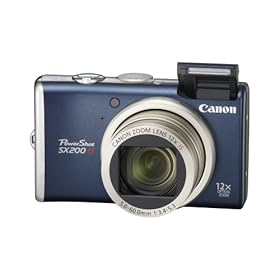
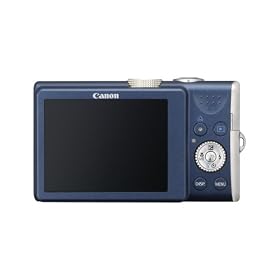
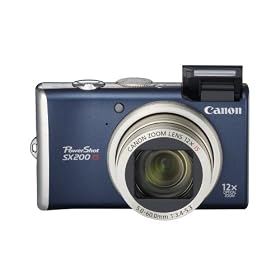
Canon a610 PowerShot SX200IS 12 MP Digital Camera with 12x Wide Angle Optical Image Stabilized Zoom and 3.0-inch LCD (Blue)

Buy this product from Amazon.com
I received this before a weekend trip and it turned out to be a very well rounded camera. It's not as small as an Elph but it's still just small and light enough to carry around in your pocket or purse for easy access. The 12x zoom lens is terrific and in well lighted situations even the digital zoom creates clear, sharp pictures. The offset is that you lose the f2.8 aperture of other 3x camera's.

I tried most of the scene settings and they all produce slightly different results. The AUTO setting uses a higher shutter speed and ISO setting than Portrait. In Program mode you can set the ISO setting to 80 or 100 and have the camera adjust the shutter speed. The foliage setting does enhance the greens. If you have enough light the indoor setting works better and uses a faster shutter speed while Night snapshot uses a slower shutter speed and produces a better overall shot in lower light. In all but the low light scenes the camera does tend to over expose the shot slightly so I ended up using the exposure adjustment at - 1/3 or -2/3's to compensate.

I really liked the ability to adjust the settings to get a well exposed picture out of a range of situations that you can't always get with an Elph and the zoom lens allows you to frame a shot from just about any distance. The pictures are clear, bright and on par with other Canon camera's in it's class. There's plenty of features to play with like face detect and blink detect and the Image Stabilization works very well.

If you are ready to step up from a point and shoot camera to one that provides more control, has a better zoom but is still pocketable the SX200 IS is well worth putting on your list to check out.
Read rest of entry

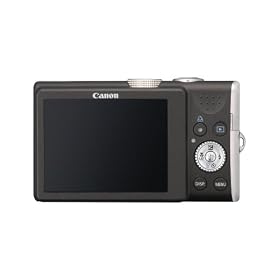
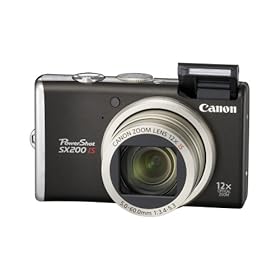
Canon sd400 PowerShot SX200IS 12 MP Digital Camera with 12x Wide Angle Optical Image Stabilized Zoom and 3.0-inch LCD LCD (Black)


This review is based off of several days of use and a THOROUGH review of the manual. If you are interested in seeing specifications and actual pictures of this camera (which I suggest you do) I recommend visiting websites that offer extensive these types of reviews (e.g. infosyncworld.com, dcresource.com, etc).
First, lets review what seems to be common CONS to the camera.

POP UP FLASH. Contrary to some reviews, this camera is not hard to handle/hold nor does the pop up flash get in the way or feel flimsy. Notice Canon has made three designs to combat this problem (e.g. indented thumbprint above controls on back of camera, curved body on right side of camera, and about 3/4 inch space to place finger behind the flash. As I right this review, I am playing around with the flash and notice it feels sturdy; not flimsy. What is the problem with having it pop up. It is actually a "techie" feature that I find interesting and one that stands out and is aesthetically pleasing.

NO VIDEO (optical) Zoom. This camera offers excellent video quality for a "point and shoot camera". It is 720 so expect that quality - no more no less. As for the zoom, it only has a digital zoom (i.e. less quality than optical). Nonetheless, it should not be a deal breaker - unless you are in the market for a digital videorecorder. I recommend a stand alone video recorder at this point. Would it be nice to have a zoom, sure, but honestly, this is not a big deal.

NOISE - Indoor use. PLEASE believe me when I say I find very little if any noise on indoor shots (when using the camera correctly (e.g reading the manual!!!). There are many ways to adjust this camera - MANY ways! Again, I am reviewing pictures I just shot today inside my local library and find them very pleasing and no noise!

FIT/FEEL of Camera. This camera does not feel flimsy. This I think I can promise you. Actually, when I got the camera in my hands, I was suprised to feel and see it was thicker than I thought - but not too thick. Still able to put in pocket (although not if you are wearing tight jeans). If you are looking at this camera, chances are you doing so because of the aesthetic body - and you are right. When/if you put it in your hands, you'll understand that it is, well, sexy and fashionable.

I have put forth what I saw as potentially "deal breakers" to some people and find all of these supposedly negative points not so negative. After thorough research and an extensive review of the manual, I find this camera to be excellent.

Finally, let me try to state what I believe to be the absolute best features of this camera.
1. Quality. The only way to defend this point is to recommend doing research. Many websites have posted pictures this camera has taken - many of them stunning. I even saw a side by side comparison with the SX200IS rival - the TZ7. It was a picture of a night time view of a major city. This camera won hands down. And as for video quality, I was happy with the quality - if you expect 720 and not blu-ray quality. It honestly is great- oh yea, and I notice that when shooting with video, the image seemed to have little or no shake ( I was suprised about this).

2. Function. You can immediately use this even if you never used a camera before. Thank canon for the "easy" function which lets you only hit the shutter button: it does ALL the work for you, and has hints/tips on the screen as you shoot. Or if you are not so novice, you can turn this camera into a complete manual function and create your own aperture, shutter, and ISO values. (This is the reason I bought this camera; so I could go more manual while my wife could just point and click).


3. After having this camera, I have noticed that CANON has not marketed this camera well enough. It has LCD image brightness control that changes on screen depending on how bright it is where you are shooting. Very nice to view the lcd. Also, the LCD has been layered with a scratch resistant coating!

Finally, in my opinion, this camera's best feature is its versatility. What I mean by this is that it takes excellent pictures and allows you to grow with the camera - this point needs to be emphasized.
I suggest that you truly do your research (as you are doing!!:) and you may see as I did that no matter how many cameras I reviewed, I kept coming back to the SX200IS. I am glad I have it.
One final point. If you do get this, please review the manual. It is your bible and will really help you understand the camera if you want to turn it into more than a point and shoot. I wrote this review because I was SHOCKED at the criticisms this camera received. I agree that this camera can be fine tuned (longer battery life.....etc...) but these are by no means deal breakers. Don't worry, whatever camera you get, it will be soon outdated - all cameras get their annual tweaking. Having said that about camera's getting outdated, note that I chose this camera for the features it has for the price it is. Having taken it home, I realize that I am more than getting my money's worth. I am honestly concerned about answering any questions you may have. I wish I could ask people questions before I buy things, so please feel free to comment and/or ask. Best wishes.
Read rest of entry

Sunday, April 5, 2009

Crucial 2GB 667 Mhz CT25664AC667 DDR2 200-Pin SODIMM Laptop Memory

BUY THIS PRODUCT FROM AMAZON.COM


I bought this RAM due to the recommendation from Amazon to go along with my Samsung NC-10 netbook. This is not compatible RAM for your netbook. I have been having system crashes from the minute I installed the RAM. If you look at Crucial's website you will see it states that the compatible RAM for that netbook is DDR2 PC2-6400 * CL=6 * Unbuffered * NON-ECC * DDR2-800 * 1.8V * 256Meg x 64 which is not the same as this. I think the actual product is fine just not working with my NC-10. Just a heads up.
Read rest of entry
 

My Blog List

Followers

Recommended Gadget

  • ads
  • ads
  • ads
  • ads

Sun Electronics And Computers Buying Guides Copyright © 2009 Gadget Blog is Designed by Ipietoon Sponsored by Online Business Journal